1. Regional Microclimate Dynamics & Severe Storm Exposure in Irondequoit Storm Damage
The Town of Irondequoit occupies a distinct peninsula bounded by the Genesee River to the west, Lake Ontario to the north, and Irondequoit Bay to the east. This geographic position exposes local residences to elevated atmospheric moisture, freezing fog, and intense gale-force wind gusting that sweeps across the water from multiple directions. Neighborhoods such as Sea Breeze, Laurelton, and Summerville feature a dense mix of historic cottages, mid-century cape cods, and brick ranches. When winter storm systems roll through, fierce winds peel shingle adhesive seals and lift ridge caps, while rapid temperature drops freeze moisture along eave transitions, causing destructive ice damming.
Localized Microclimate & Atmospheric Dynamics
- Lake Ontario Convective Snow Squalls: Hyper-localized snow plumes generating rapid snow accumulations with severe localized snow loads.
- Subzero Freeze-Thaw Thermal Cycling: Daily thermal swings breaking shingle seals and stressing masonry mortar joints.
- Aerodynamic Wind Funneling: High velocity wind regimes tearing unsealed shingles and lifting ridge caps.
2. Non-Destructive Moisture Diagnostics & FLIR Thermal Tracing
Forensic inspection following severe winter storms or convective squalls in Irondequoit involves rigorous diagnostic methodology. Dispatched technicians utilize FLIR thermal imaging cameras to trace cold-water thermal bridges across plaster and drywall ceilings before surface staining becomes visible. In the attic space, inspectors examine roof rafter deflections under heavy snow loads, inspect roof sheathing for rot or mold from persistent moisture saturation, and test moisture content using calibrated electronic moisture meters. Exterior assessments carefully evaluate shingle tab adhesion, metal drip edge displacement, valley flashing integrity, and chimney masonry mortar joints.
Forensic Diagnostic Protocols
- High-Resolution FLIR Thermal Scans: Pinpoint sub-surface moisture evaporation behind interior ceilings and walls without demolition.
- RF & Pinless Moisture Meters: Quantify substrate saturation percentages in roof decking, rafters, and attic insulation.
- Uplift & Fastener Inspection: Methodical examination of shingle nail patterns, valley transitions, and perimeter drip edges.
3. Step-by-Step Substrate Restoration Methodology
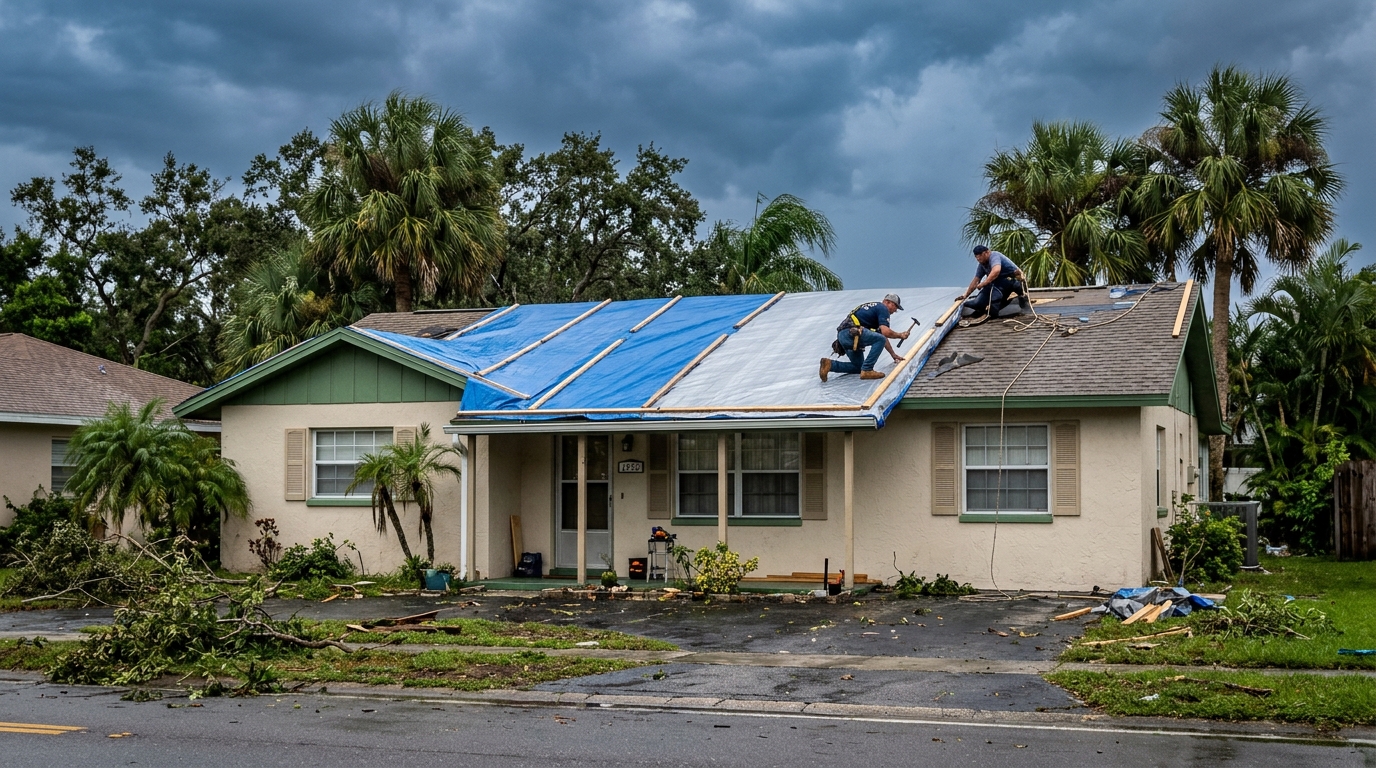
On-site emergency intervention in Irondequoit follows strict engineering standards to stabilize the building envelope: For active leaks caused by massive snow accumulation and ice dams, technicians use specialized commercial steamers to melt drainage channels down to the gutters, releasing trapped water reservoirs behind the dam. If high winds or fallen tree limbs have torn away shingles or punctured roof decking, technicians deploy reinforced 12-mil poly tarps secured using full-perimeter lumber batten strips. Battens are anchored directly into structural rafters with ring-shank fasteners to resist Irondequoit's notorious wind gusts, ensuring the temporary seal holds firmly until permanent restoration can be executed.
Key Technical Engineering Protocols
- Low-Pressure Vapor Steam Relief: High-temperature (290°F) steam safely channels ice dams without mechanical impact damage.
- Structural Batten Tarp Anchoring: Kiln-dried 2x2 battens screwed directly into rafters to withstand 50+ mph wind gusts.
- Interior Pressure Relief: Controlled drainage punctures prevent water weight from causing ceiling drywall collapse.
4. State Energy Efficiency Codes & Contractor Licensing Compliance
All roofing contractor referrals and emergency dispatches in Irondequoit adhere strictly to New York State Uniform Building Codes and local Town of Irondequoit building standards. Dispatched independent contractors maintain valid municipal business licenses, provide transparent written scope estimates conforming to major insurance carrier estimating software, and operate fully insured with general liability and statutory workers' compensation coverage. RoofExpertUSA functions solely as an independent referral clearinghouse.
Regulatory & Consumer Compliance Standards
- NYS Uniform Building Code R905: Strict compliance with mandatory ice barrier self-adhering membrane underlayments.
- Local Municipal Registrations: Independent contractors maintain active trade licenses in Monroe County municipalities.
- Direct Insurance Scope Alignment: Itemized photographic logs conforming to standard carrier adjustment protocols.
5. Preventative Property Maintenance & Storm Preparedness
Irondequoit property owners can significantly mitigate severe storm vulnerabilities through disciplined preventative roof management. Prior to the onset of the winter snow season, clear all leaves and debris from gutters and downspouts, particularly in neighborhoods with dense mature trees. Inspect attic spaces to ensure adequate intake ventilation through soffit vents and install high-density insulation to maintain attic temperatures below 30 degrees Fahrenheit during freezing weather. After severe lake-effect snow events, contact professional roofers for non-invasive snow removal rather than attempting hazardous DIY roof shoveling that damages shingles.
Long-Term Building Envelope Resilience
- Attic Thermal Balance: Maintain proper R-49+ insulation and unobstructed soffit ventilation to keep roof decks cold.
- Bi-Annual Drainage Maintenance: Clear gutters, conductor heads, and downspouts before freezing winter weather arrives.
- Non-Destructive Snow Clearing: Use poly roof rakes leaving a protective snow buffer to safeguard shingle granules.