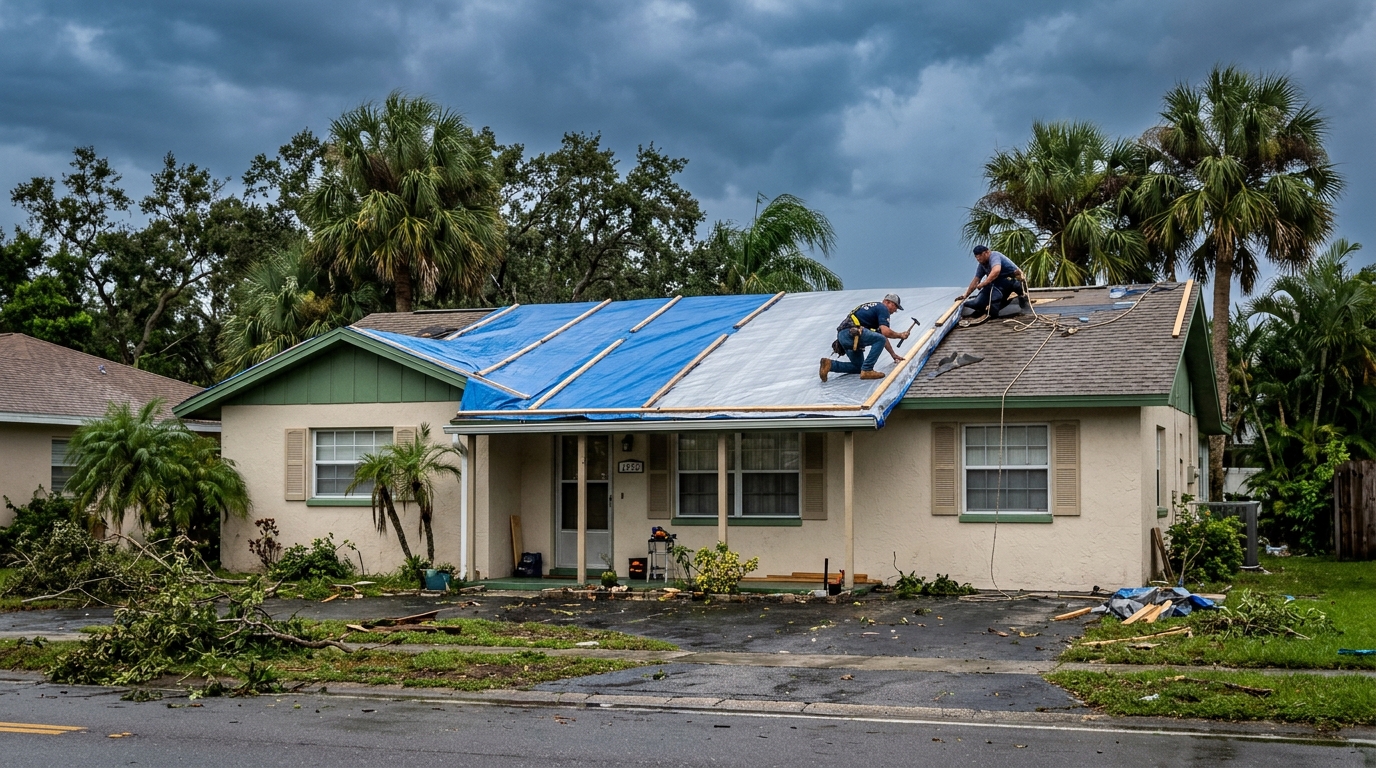
1. Regional Microclimate Dynamics & Severe Storm Exposure in Rochester
Severe weather events in Western New York—including Lake Ontario lake-effect blizzards, Arctic cold snaps, and summer microbursts—frequently cause catastrophic damage to residential and commercial roofing envelopes. Sustained winds exceeding 50 mph tear architectural shingles from their adhesive nail lines, lift ridge caps, and topple heavy tree branches onto structural roof trusses. When an impact puncture or extensive shingle blow-off occurs, immediate weatherproofing tarp installation is essential to arrest cascading water damage, prevent mold colonization, and protect valuable interior furnishings.
Localized Microclimate & Atmospheric Dynamics
- Lake Ontario Convective Snow Squalls: Heavy, water-dense snowfall creating immense localized dead weight (20 to 40+ PSF) on residential rafters.
- Subzero Freeze-Thaw Thermal Cycling: Repeated daily freezing and thawing destabilizing shingle seals, masonry mortar, and metal flashings.
- Gale Wind Funneling & Aerodynamic Uplift: High-velocity winter wind regimes peeling shingle tabs and lifting unsealed ridge caps.
2. Non-Destructive Moisture Diagnostics & FLIR Thermal Tracing
Forensic inspection prior to tarp deployment is critical to ensure worker safety and effective envelope sealing. Dispatched technicians evaluate structural truss deflection, identify compromised rafter spans beneath puncture points, and map the full perimeter of shingle uplift using non-destructive moisture meters. Technicians locate rafter centerlines through existing decking to establish structural anchor points, ensuring that tie-down anchors do not pull out under severe aerodynamic uplift.
Forensic Diagnostic Protocols
- High-Resolution FLIR Thermal Scans: Pinpoint sub-surface moisture evaporation behind interior plaster and drywall ceilings without demolition.
- RF & Pinless Moisture Meters: Quantify substrate saturation percentages in roof decking, rafters, and attic floor joists.
- Uplift & Fastener Inspection: Methodical examination of shingle nail patterns, valley transitions, and perimeter drip edges.
3. Step-by-Step Substrate Restoration Methodology
Professional emergency tarping requires specialized engineering standards that far exceed basic DIY methods. Crews deploy commercial-grade 10-mil to 12-mil woven polyethylene tarps with heavy UV stabilizers. Tarps are drawn taut across the ridge line whenever feasible to prevent wind catch. Edges and seams are secured using 2x2 or 1x3 kiln-dried lumber batten strips. Batten strips are wrapped completely into the tarp edges (sandwich wrap) before being fastened with galvanized ring-shank nails or structural screws directly into rafter members. Dispatched crews also execute Gale Wind Shingle Bonding along exposed perimeter perimeters, ensuring wind-lifted shingle tabs are secured until full restoration is completed.
Key Technical Engineering Protocols
- Low-Pressure Vapor Steam Relief: High-temperature (290°F) steam safely channels ice dams without mechanical impact damage.
- Specialized Technical Protocol: Integration of Gale Wind Shingle Bonding to fortify compromised building envelopes.
- Structural Batten Tarp Anchoring: Kiln-dried 2x2 battens screwed directly into rafters to withstand 50+ mph wind gusts.
4. State Energy Efficiency Codes & Contractor Licensing Compliance
Dispatched independent contractors operate in full compliance with New York State consumer protection regulations, providing clear written estimates for emergency mitigation that comply with major homeowner insurance carrier guidelines. In Monroe County and surrounding municipalities, emergency temporary tarping does not typically require an immediate building permit, allowing crews to deploy within hours of storm clearance, while permanent structural deck repairs are coordinated through local municipal permit channels.
Regulatory & Consumer Compliance Standards
- NYS Uniform Building Code R905: Strict compliance with mandatory ice barrier self-adhering membrane underlayments.
- Local Municipal Registrations: Independent contractors maintain active trade licenses in Rochester and Monroe County.
- Direct Insurance Scope Alignment: Itemized photographic logs conforming to standard carrier adjustment protocols.
5. Preventative Property Maintenance & Storm Preparedness
Homeowners must understand that emergency roof tarping is an interim protective barrier designed to safeguard the structure for 30 to 90 days while insurance adjusters assess losses and roofing materials are procured. Property owners should inspect tarp tie-downs following subsequent wind events and avoid climbing onto slick tarp surfaces. Coordinating prompt permanent repairs with a licensed roofing contractor ensures full warranty restoration and long-term building envelope integrity.
Long-Term Building Envelope Resilience
- Attic Thermal Balance: Maintain proper R-49+ insulation and unobstructed soffit ventilation to keep roof decks cold.
- Bi-Annual Drainage Maintenance: Clear gutters, conductor heads, and downspouts before freezing winter weather arrives.
- Non-Destructive Snow Clearing: Use poly roof rakes leaving a protective snow buffer to safeguard shingle granules.