1. Regional Microclimate Dynamics & Severe Storm Exposure in Rochester
Low-slope and flat roof assemblies—commonly found on commercial storefronts along Monroe Avenue, residential additions in Brighton, and industrial properties in Rochester—face severe weather challenges from Lake Ontario winters. Unlike steep-pitch roofs that shed water rapidly, flat roofs rely on continuous waterproof membranes and slight quarter-inch-per-foot positive drainage slopes. When heavy lake-effect snowfall accumulates, uneven dead-load deflection creates low spots. Snowmelt collects in these depressions, creating ponding water that remains stagnant for days. During freeze-thaw cycles, ponded water expands into thick ice lenses that tear membrane seams and force water into underlying polyisocyanurate roof insulation.
Localized Microclimate & Atmospheric Dynamics
- Lake Ontario Convective Snow Squalls: Heavy, water-dense snowfall creating immense localized dead weight (20 to 40+ PSF) on residential rafters.
- Subzero Freeze-Thaw Thermal Cycling: Repeated daily freezing and thawing destabilizing shingle seals, masonry mortar, and metal flashings.
- Gale Wind Funneling & Aerodynamic Uplift: High-velocity winter wind regimes peeling shingle tabs and lifting unsealed ridge caps.
2. Non-Destructive Moisture Diagnostics & FLIR Thermal Tracing
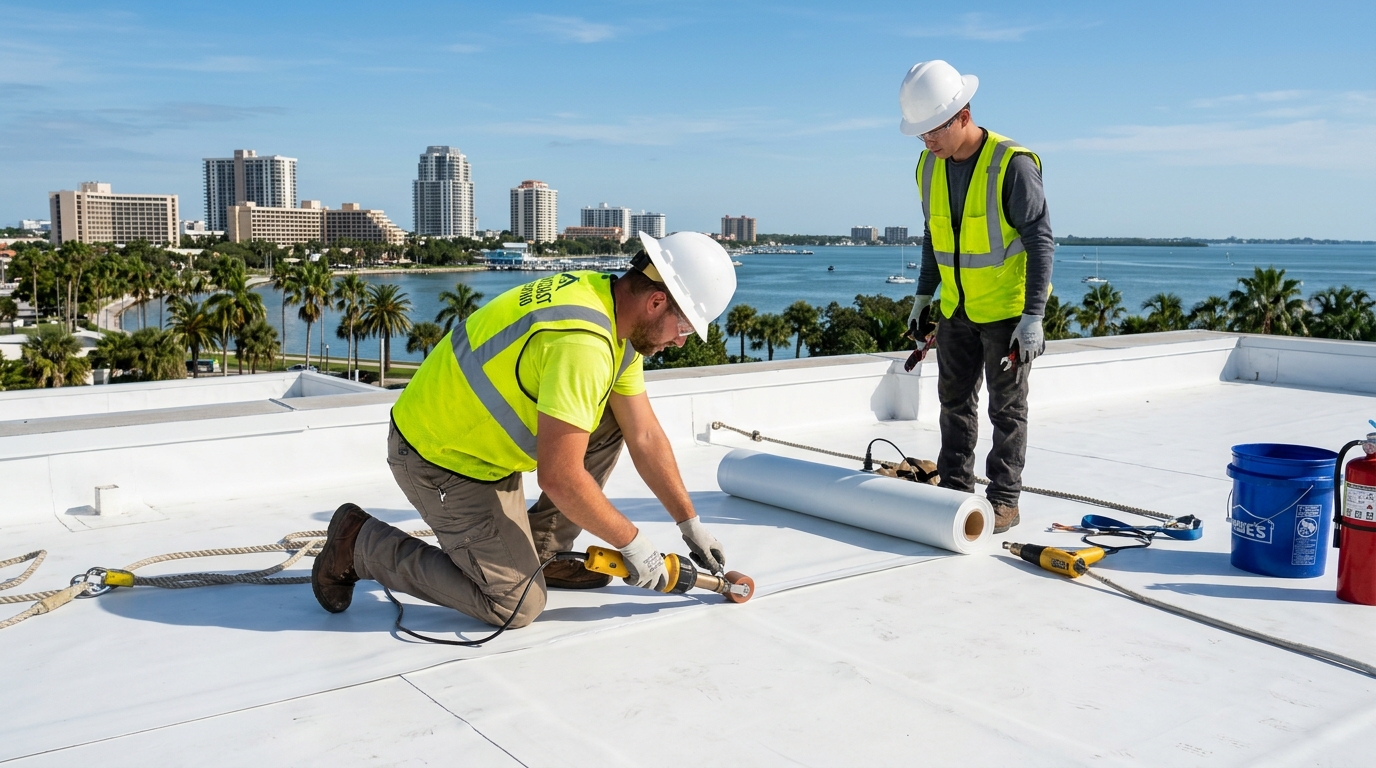
Forensic evaluation of flat roof leaks requires precision diagnostic methods. Dispatched low-slope specialists deploy high-resolution FLIR infrared thermal cameras at dusk to visualize sub-membrane insulation moisture entrapment. Wet insulation holds thermal energy longer than dry insulation, creating glowing hot spots on thermal scans. Technicians conduct non-destructive seam probe inspections along vulcanized EPDM seams and hot-air-welded TPO joints, checking for unbonded laps, mechanical fastener back-outs, and perimeter termination pull-away.
Forensic Diagnostic Protocols
- High-Resolution FLIR Thermal Scans: Pinpoint sub-surface moisture evaporation behind interior plaster and drywall ceilings without demolition.
- RF & Pinless Moisture Meters: Quantify substrate saturation percentages in roof decking, rafters, and attic floor joists.
- Uplift & Fastener Inspection: Methodical examination of shingle nail patterns, valley transitions, and perimeter drip edges.
3. Step-by-Step Substrate Restoration Methodology
Emergency flat roof stabilization requires specialized materials engineered to bond under damp, cold conditions: Dispatched crews clear standing water using submersible drainage pumps and industrial squeegees. Clogged internal drains, overflow scuppers, and conductor heads are thawed and freed of ice blockages. For ruptured membrane seams and punctures, technicians apply commercial fleece-reinforced SBS modified bitumen patches or cold-applied elastomeric mastic systems with woven polyester scrim, creating an impermeable structural bridge that cures even in near-freezing temperatures.
Key Technical Engineering Protocols
- Low-Pressure Vapor Steam Relief: High-temperature (290°F) steam safely channels ice dams without mechanical impact damage.
- Specialized Technical Protocol: Integration of Low-Slope Elastomeric Seam Welded Patch to fortify compromised building envelopes.
- Structural Batten Tarp Anchoring: Kiln-dried 2x2 battens screwed directly into rafters to withstand 50+ mph wind gusts.
4. State Energy Efficiency Codes & Contractor Licensing Compliance
All low-slope roofing interventions facilitated through RoofExpertUSA adhere strictly to the 2020 New York State Building Code Chapter 15 governing roof assemblies and drainage slope standards. Dispatched independent commercial roofing contractors carry high-limit commercial general liability policies, maintain active municipal trade registrations across Monroe County, and provide comprehensive digital photographic dossiers detailing before-and-after conditions for property managers and insurance adjusters.
Regulatory & Consumer Compliance Standards
- NYS Uniform Building Code R905: Strict compliance with mandatory ice barrier self-adhering membrane underlayments.
- Local Municipal Registrations: Independent contractors maintain active trade licenses in Rochester and Monroe County.
- Direct Insurance Scope Alignment: Itemized photographic logs conforming to standard carrier adjustment protocols.
5. Preventative Property Maintenance & Storm Preparedness
Property owners with flat roof assemblies should establish a biannual preventive maintenance schedule. Every spring and autumn, inspect internal drain strainers and scuppers to ensure they are free of leaves, gravel, and silt. Check perimeter parapet wall counter-flashings for separation and inspect field seams for adhesive degradation. Installing tapered insulation crickets during future re-roofing projects permanently eliminates recurrent ponding basins and extends roof membrane service life by decades.
Long-Term Building Envelope Resilience
- Attic Thermal Balance: Maintain proper R-49+ insulation and unobstructed soffit ventilation to keep roof decks cold.
- Bi-Annual Drainage Maintenance: Clear gutters, conductor heads, and downspouts before freezing winter weather arrives.
- Non-Destructive Snow Clearing: Use poly roof rakes leaving a protective snow buffer to safeguard shingle granules.